Tendon Repair

We reconnect torn tendons to restore function.

When a cut or injury tears a tendon, the finger may not bend or straighten properly. The fresher the injury, the more repairing it quickly benefits recovery.

When Repair Is Considered

The finger will not bend or straighten after a cut
The tendon is completely torn or more than half damaged
The injury is relatively recent and the wound is clean
You want to restore function through focused rehabilitation
When Repair Is Considered

Real Treatment Case

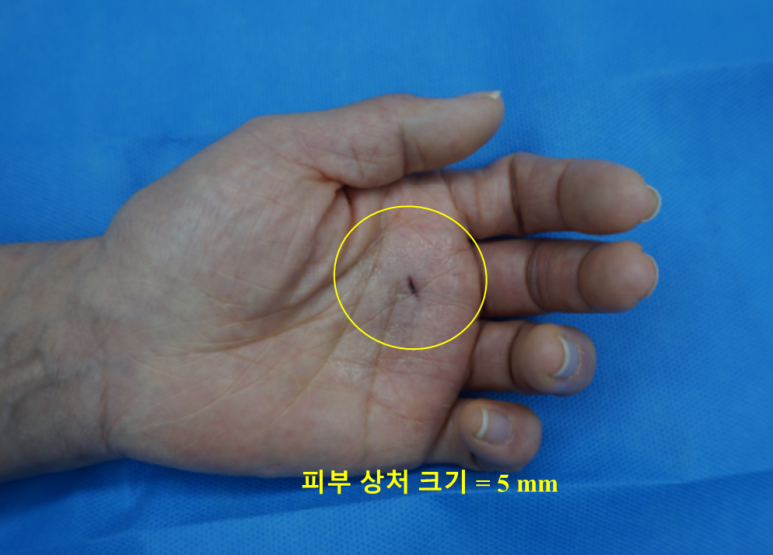
Photo of a 5 mm wound on the palm
A palm wound that looks small on the surface
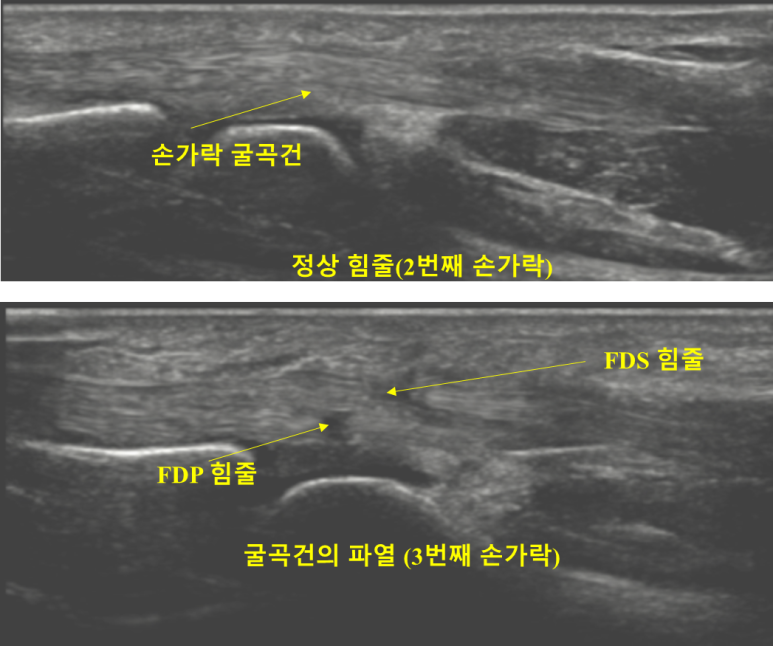
Ultrasound image of the finger flexor tendon tear
Flexor tendon tear suspected on ultrasound
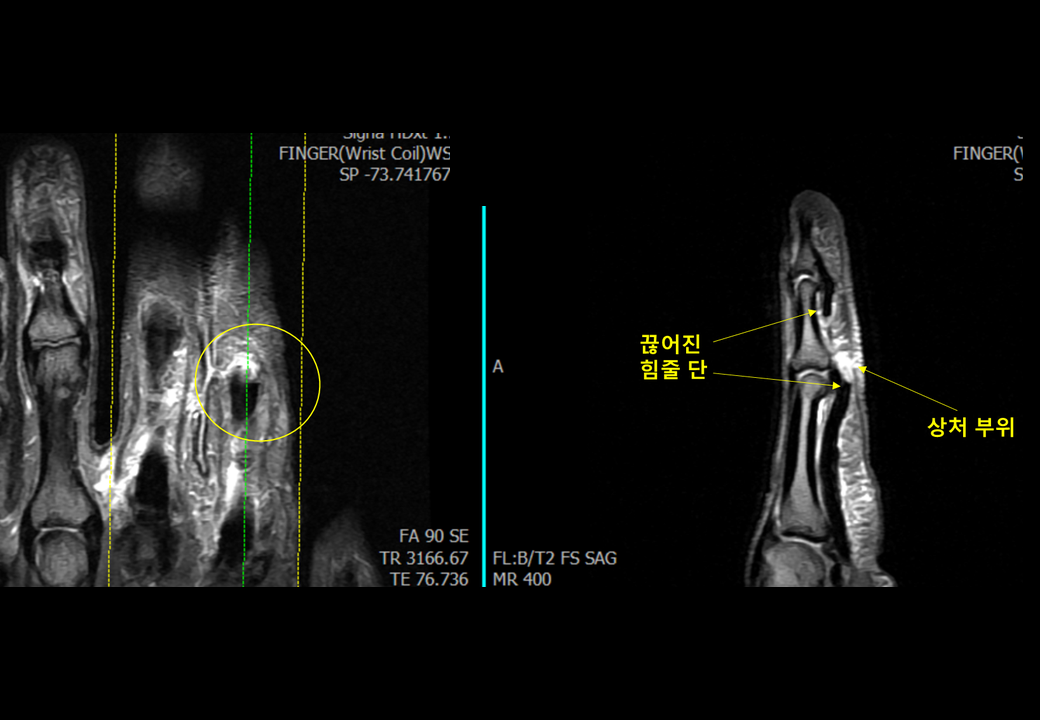
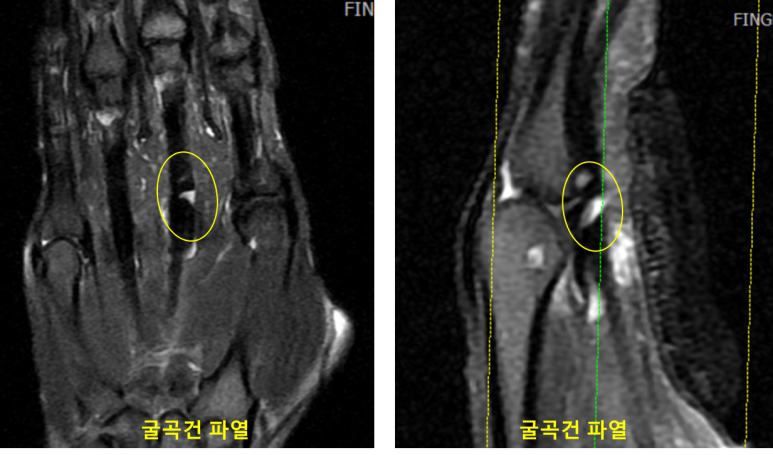
MRI image of the finger flexor tendon tear
Flexor tendon tear confirmed on MRI
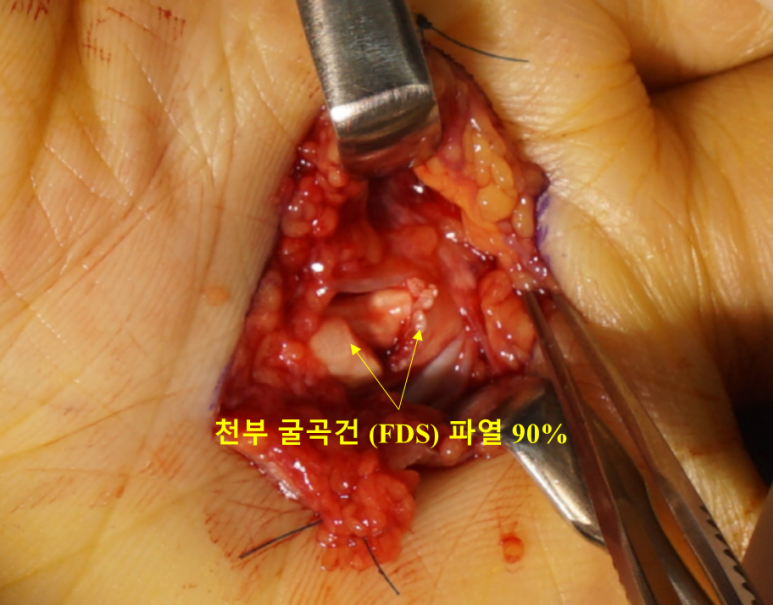
Photo confirming the flexor tendon tear during surgery
The wound was extended to check the torn area
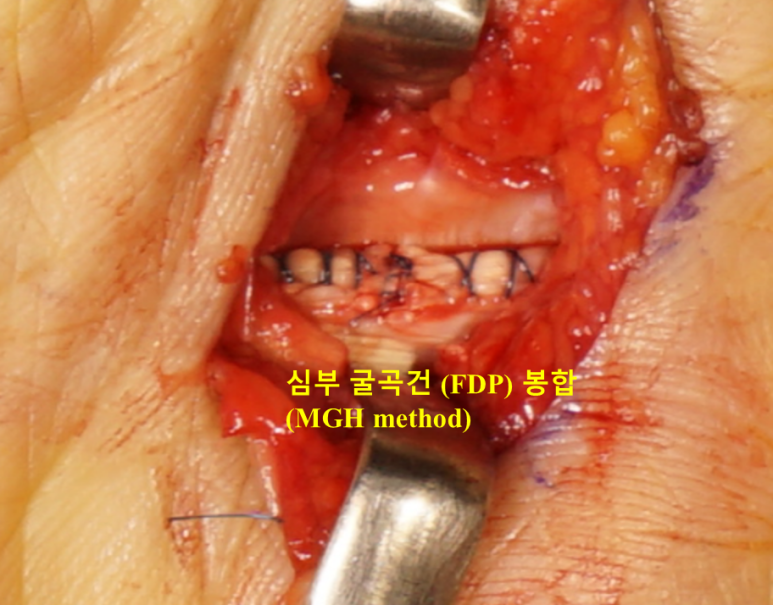
Surgical photo after flexor tendon repair
Confirmed after flexor tendon repair
Knife Injury, Flexor Tendon Zone 3

Repair of a Finger Flexor Tendon Tear Hidden Beneath a Small Wound

The wound was small, about 5 mm, but ultrasound and MRI confirmed a tear of the third finger flexor tendon. Because tendons, nerves, and blood vessels lie close together in the hand, even a small wound must be checked for deeper injury.

View Original Blog Post
Situation
A 43 year old woman visited after cutting her palm with a knife while slicing garlic at home. The wound was small and the finger seemed able to move, but the finger flexor tendon runs beneath that location.
Treatment focus
Ultrasound raised suspicion of a third finger flexor tendon tear, and MRI clearly confirmed it. During surgery, the existing wound was extended to explore the area, nerve status was checked, and the torn flexor tendon was repaired.
Recovery guidance
After tendon repair, both re-rupture and stiffness must be avoided, so a rehabilitation plan is important. In this case, recovery of joint range of motion was confirmed by week 5 after surgery.
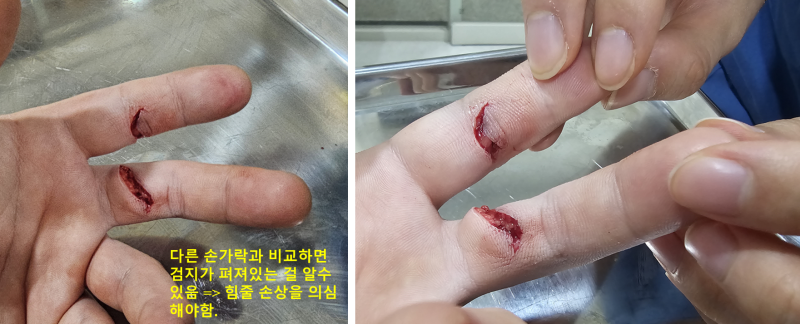
Preoperative photo of glass lacerations to the index and middle fingers
Glass lacerations to the index and middle fingers
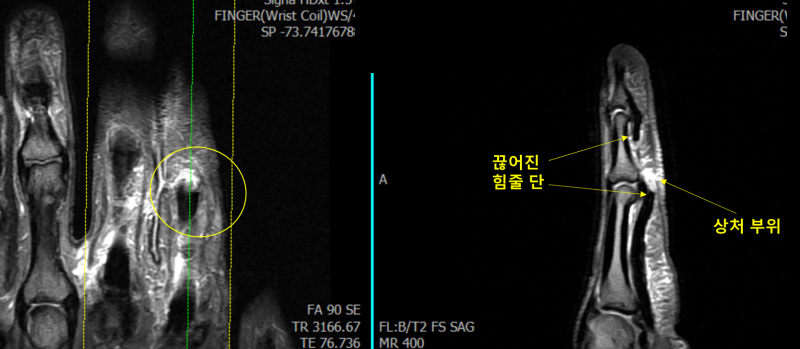
Preoperative MRI marking a complete Zone II flexor tendon tear in the index finger
Flexor tendon tear confirmed on preoperative MRI
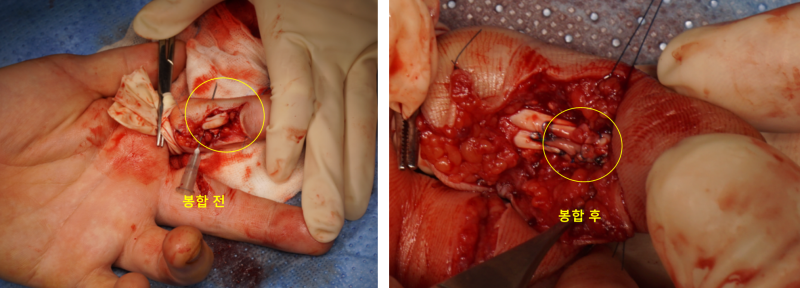
Surgical photos comparing the index finger flexor tendon before and after repair
Before and after flexor tendon repair
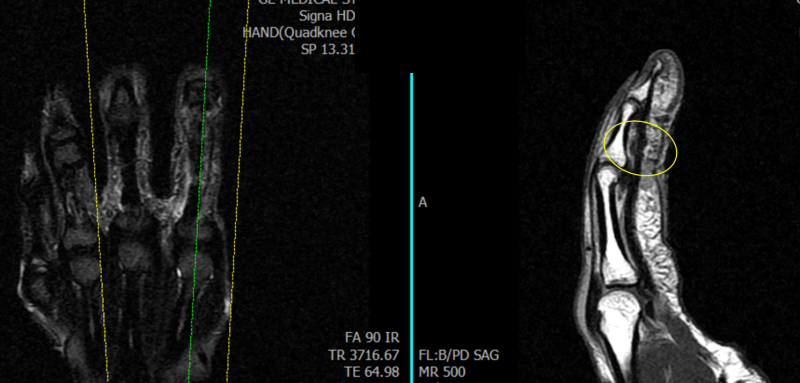
Postoperative MRI confirming continuity of the repaired index finger flexor tendon
Tendon continuity confirmed on postoperative MRI
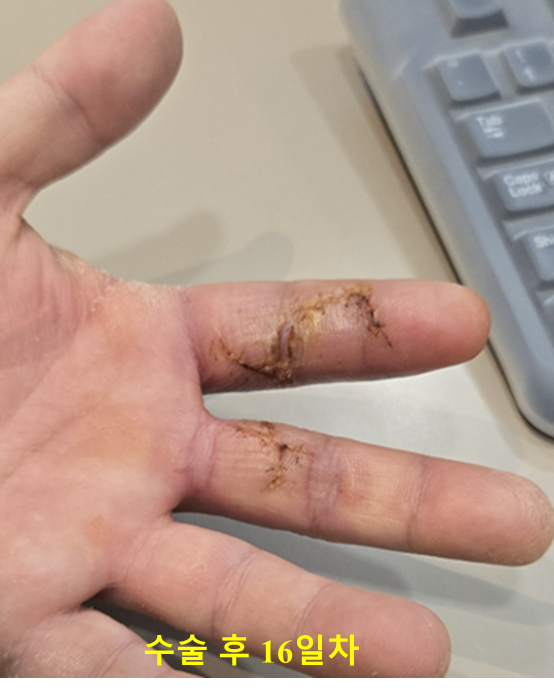
Wound photo 16 days after flexor tendon repair of the index and middle fingers
Wound appearance 16 days after surgery
Glass Injury, Flexor Tendon Zone II

Zone II Flexor Tendon Repair After a Glass Laceration to the Index Finger

Although the wound on the middle finger looked larger, the index finger rested abnormally straight and could not bend. Evaluation confirmed a complete flexor tendon tear in the index finger.

View Original Blog Post
Situation
A 37 year old man visited after cutting his index and middle fingers on glass while sorting recyclables. The index finger rested straighter than the others and could not bend actively, raising concern for a flexor tendon injury.
Treatment focus
MRI confirmed a complete flexor tendon tear with approximately 11 mm of remaining tendon length. The wound was in Zone II; the FDS was torn in Zone II, while the FDP was torn near the Zone I to II border. During surgery, the torn tendon ends were identified and repaired.
Recovery guidance
Postoperative MRI confirmed continuity of the tendon. To reduce both re-rupture and stiffness, passive motion began three days after surgery, followed by active flexion and staged rehabilitation as recovery progressed.

The photos and descriptions above are summarized from blog posts to help you understand these cases. Even a small wound from a knife or glass injury may hide damage to tendons, nerves, or blood vessels, so it needs to be checked during evaluation.

Recovery and Precautions

A protective splint is kept on the finger in the early period.
Careful exercises begin on a set schedule, and using the finger too forcefully too early is avoided.
Full recovery usually takes three months or more, and consistent rehabilitation is important.

If the repair suddenly feels like it has given way, or if the finger stops moving again, please contact us right away.

Frequently Asked Questions

QCan a repaired tendon tear again?
The repair is weak in the early period, so forceful use can cause it to tear again. Following the rehabilitation schedule closely greatly reduces this risk.
QWill function return 100 percent?
Many patients recover enough function for daily life. Results vary depending on the severity of the injury and adherence to rehabilitation.

Do not put off persistent pain. Have it checked.

Our staff can guide you during clinic hours. Call us if you have questions before your visit.

CallHoursTop