
Checking your muscle balance and deep muscle activation helps identify the right direction for rehabilitation exercise.
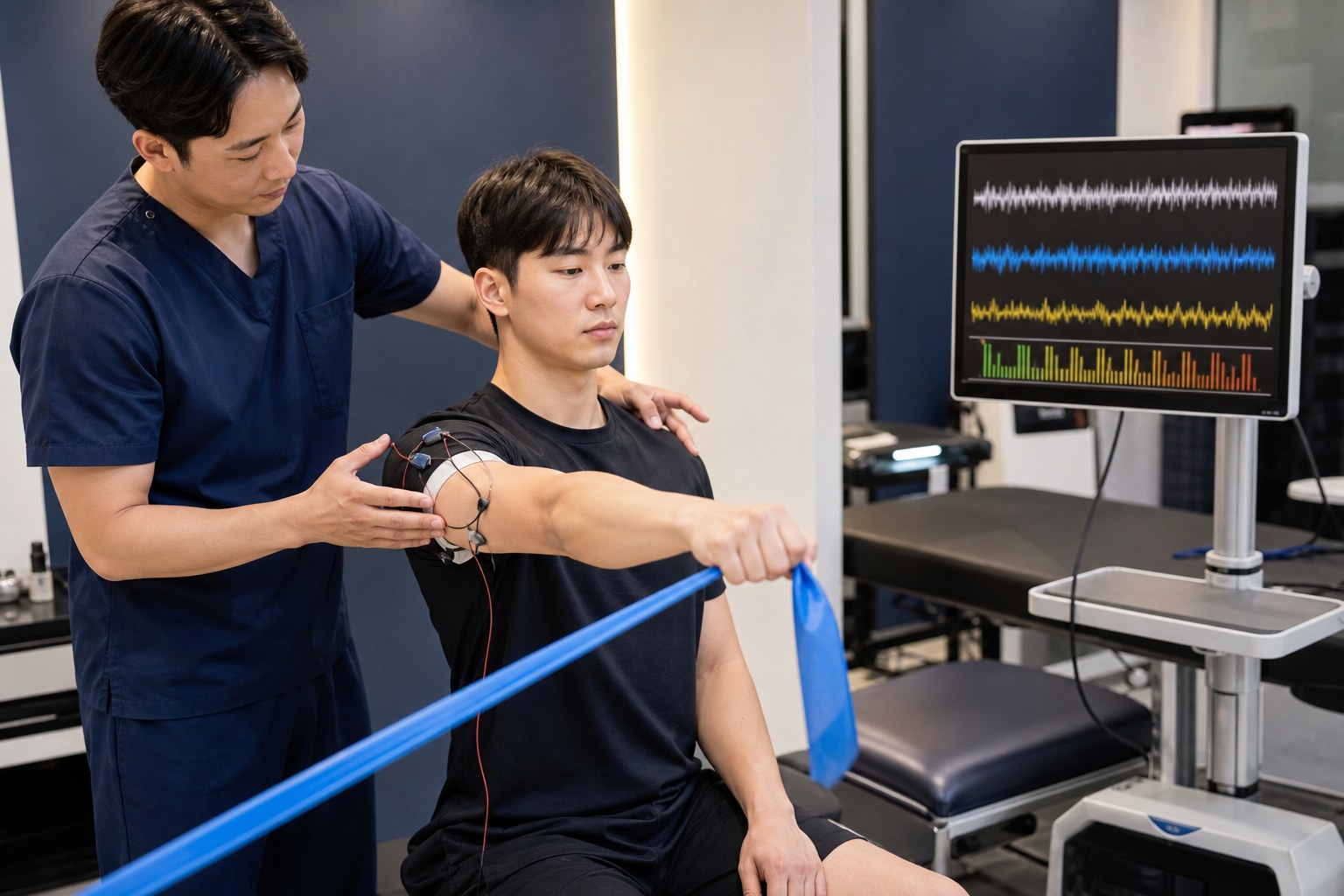
Surface electromyography (sEMG) displays your muscles' electrical signals on a screen in real time. It helps wake up underused muscles and calm down overused ones as part of recovery.
Who This Can Help

See how muscles you couldn't previously observe are engaging, and recover with that feedback.
How It Works
- 01
Attaching Sensors and Establishing a Baseline
No pain involvedSurface sensors are attached to the target muscle to record signal ranges at rest and under effort.
- 02
Adjusting While Watching the Screen
10-20 minutes per sessionAs you engage the muscle, the graph on screen changes, letting you check and practice correct activation right away.
- 03
Gradually Increasing Difficulty
As control improves, movement and load are increased to carry over into real-life and exercise activities.
Exercise Rehabilitation Demonstration Video

Video coming soon
What We Check
Muscle Use
We check whether the muscles that need to be engaged are activating properly.
Compensatory Movement
We identify habits of overusing other muscles to avoid a painful area.
Return-to-Activity Movements
We connect the exercise to the movements you need for daily life and sport.
Frequently Asked Questions
QDoes it send electricity through me? Does it hurt?
Rather than a single session, repeated training is what matters. Muscle control and strength typically improve over several weeks.
QHow is this different from regular physical therapy?
Do not put off persistent pain. Have it checked.
Our staff can guide you during clinic hours. Call us if you have questions before your visit.