
Spine Procedure Clinic
A Procedure May Be Considered If You Have These Back and Leg Symptoms

Main Procedure
Spine procedures are selected only when needed, based on the location of pain together with imaging findings.
How Epidural Neuroplasty Is Performed
- 01
Reviewing Imaging and Symptom Location
Pre-procedure assessmentBased on MRI and examination findings, the nerve area causing the pain is identified.
- 02
Approaching the Lesion With a Catheter
Minimally invasiveA catheter is inserted through the tailbone and guided close to the lesion, with contrast dye used to confirm its position.
- 03
Releasing Adhesions and Delivering Medication
Recovery planMedication is delivered to reduce adhesions and inflammation around the nerve, followed by guidance on rehabilitation and lifestyle management.
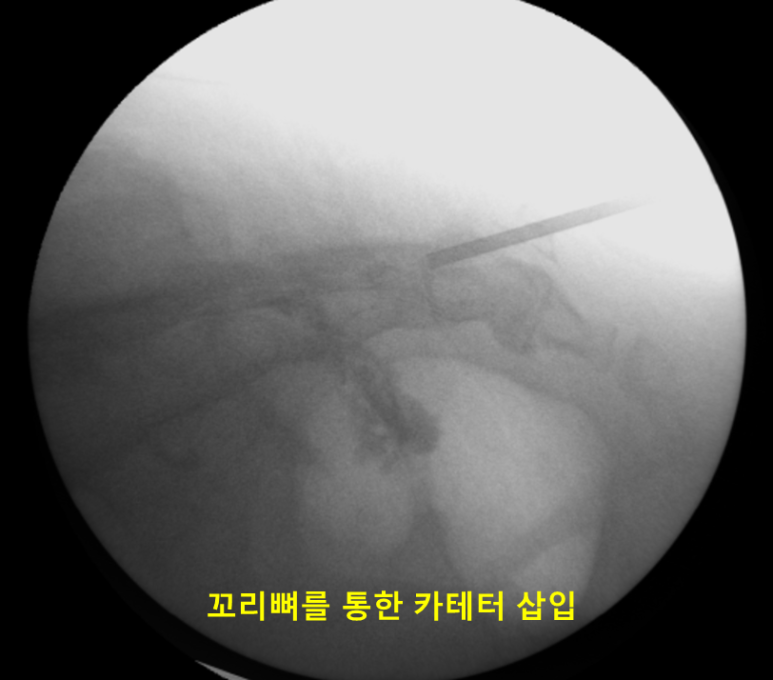
Catheter insertion through the tailbone
This shows the catheter being inserted through the tailbone and guided to the lesion.
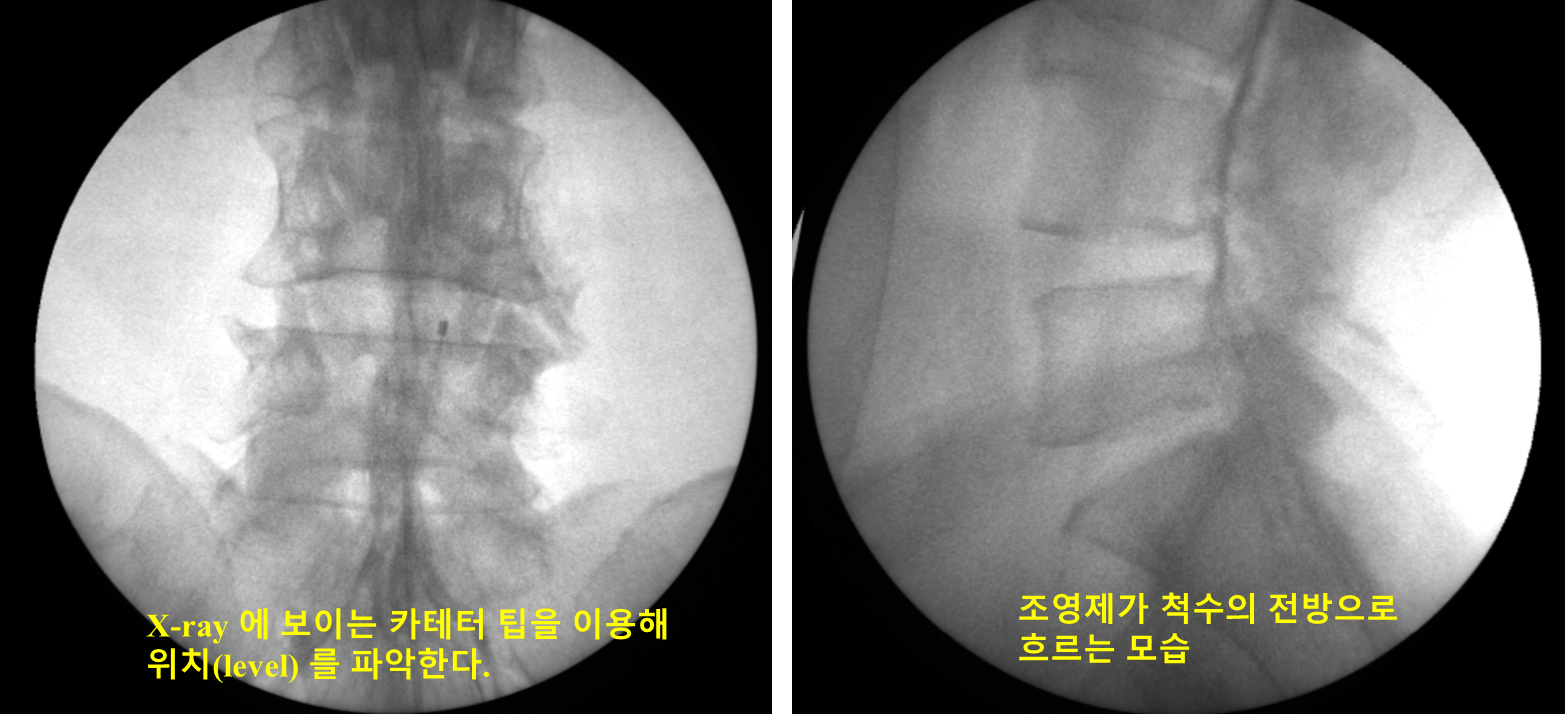
Confirming catheter position and contrast flow
X-ray is used to confirm the catheter tip's position and check whether the contrast dye flows toward the front of the spinal canal.
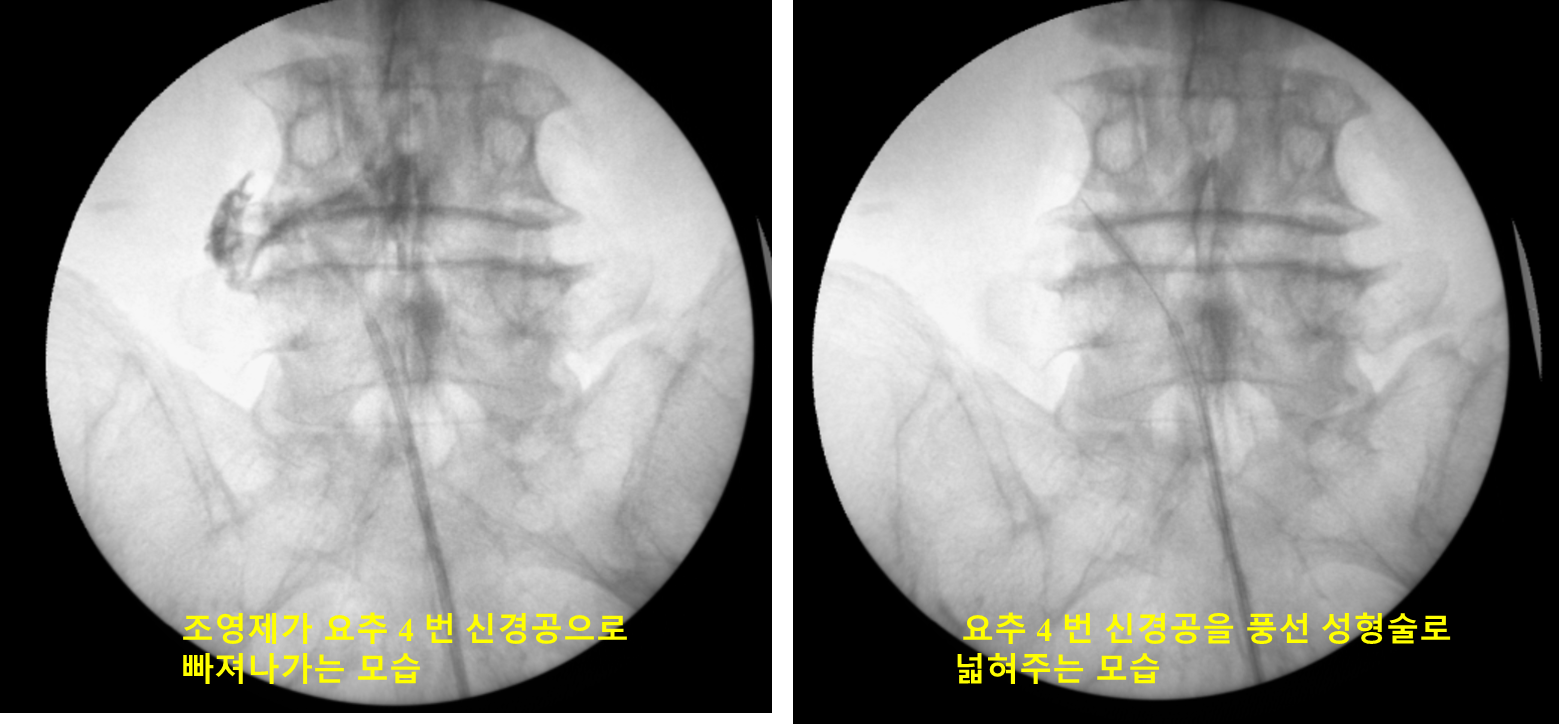
Foraminal contrast imaging and balloon dilation
After confirming where the contrast dye exits at the L4 nerve root foramen, balloon dilation is used to widen the foramen.
Epidural Neuroplasty Outcome Statistics
These statistics reflect the 3-6 month outcomes of 34 patients treated directly by the director.
The original source reported an average follow-up period of about 1.5 months, and noted that about 14% of cases required additional injection treatment.
Epidural neuroplasty is not a cure-all substitute for surgery - it's a minimally invasive procedure chosen when the indications are appropriate.
Frequently Asked Questions
QWho is epidural neuroplasty suitable for?
QIs the procedure alone enough?
QIs this needed for every case of disc herniation?
Do not put off persistent pain. Have it checked.
Our staff can guide you during clinic hours. Call us if you have questions before your visit.