
Shoulder Procedure Clinic
A Procedure May Be Considered If You Have...

Main Procedures
The procedure is selected based on the cause of pain and the stage of the condition.
How Calcific Aspiration Is Performed
- 01
Locating the Deposit With Ultrasound
Local anesthesiaUltrasound is used to precisely check the location, size, and inflammation of the calcium deposit.
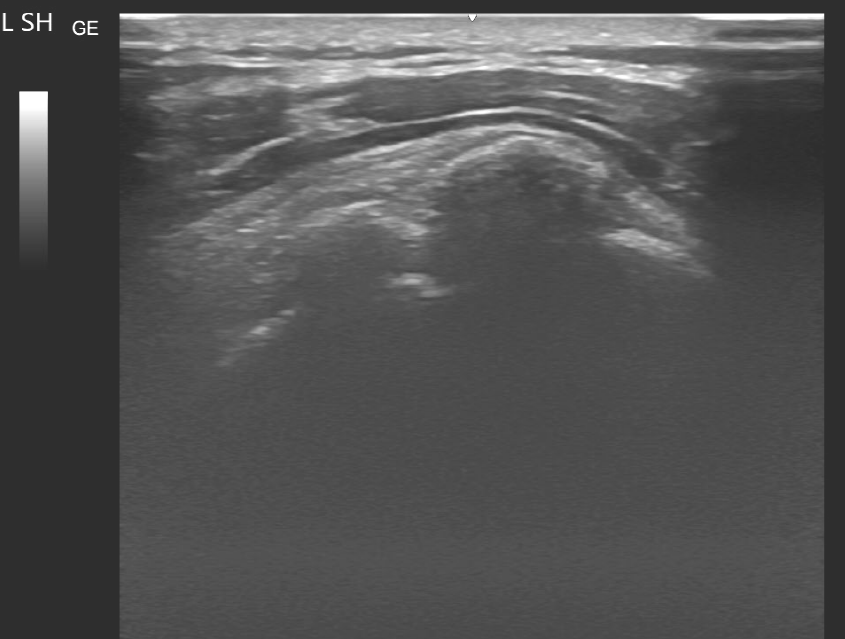
Locating the calcium deposit with ultrasound - 02
Breaking Up and Aspirating With a Needle
About 20-30 minutesA fine needle punctures the deposit repeatedly to break it up, then it's flushed out with saline.
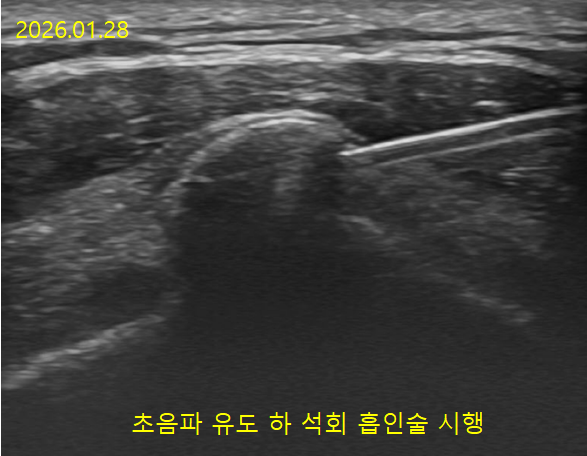
Ultrasound-guided calcific aspiration - 03
Reducing Inflammation and Finishing Up
If needed, an anti-inflammatory medication is injected to complete the procedure. You can go home the same day.
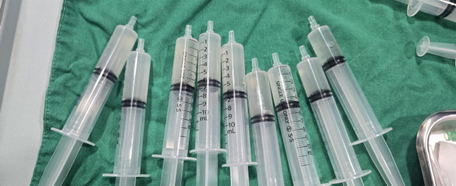
Calcium powder removed after aspiration
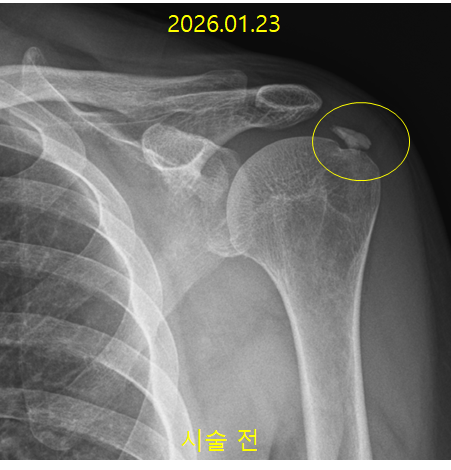
Before the procedure
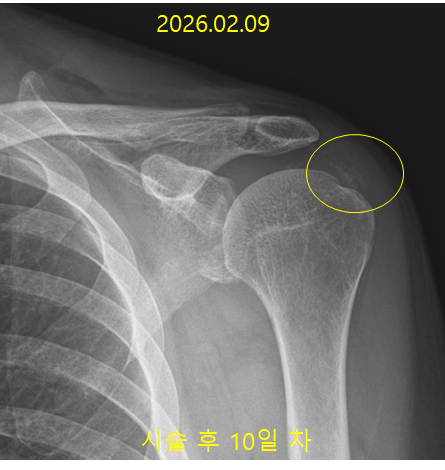
10 days after the procedure
How Shoulder Joint Mobilization Is Performed
- 01
Regional Anesthesia and Assessment
Regional anesthesia of the armWe check the location of pain, the direction of stiffness, and the current range of motion, then determine a safe range for movement.
- 02
Gradually Mobilizing the Stiff Joint
Same-day procedureThe physician slowly moves the shoulder through flexion, abduction, and rotation to release the joint adhesions.
- 03
Checking Range of Motion and Rehab Guidance
Same-day dischargeMovement is reassessed right after the procedure, and a stretching and rehabilitation plan is provided to help prevent the shoulder from stiffening again.
How Hydrodilatation Is Performed
- 01
Locating the Joint Capsule With Ultrasound
No anesthesia neededUltrasound is used to identify a safe entry point into the shoulder joint and plan the injection path.
- 02
Injecting Medication and Saline
Same-day procedureMedication and saline are slowly injected into the joint to expand the joint capsule and ease adhesions.
- 03
Checking Movement and Stretching Guidance
Same-day dischargeAfter the procedure, pain and range of motion are checked, and gentle stretches you can begin that same day are explained.
Frozen Shoulder Can Often Improve With These Two Key Treatments
Which method is right for you is decided after an examination that considers the degree of stiffness, pain, and bone condition.
Frequently Asked Questions
QIs all of the calcium removed in one session?
QIf I have shoulder joint mobilization, can I skip rehab?
QDoes the pain go away right after the procedure?
Do not put off persistent pain. Have it checked.
Our staff can guide you during clinic hours. Call us if you have questions before your visit.