
Lumbar Spondylolisthesis
Forward slippage of one lumbar vertebra can cause lower back pain or symptoms from nerve compression.
Understanding Lumbar Spondylolisthesis
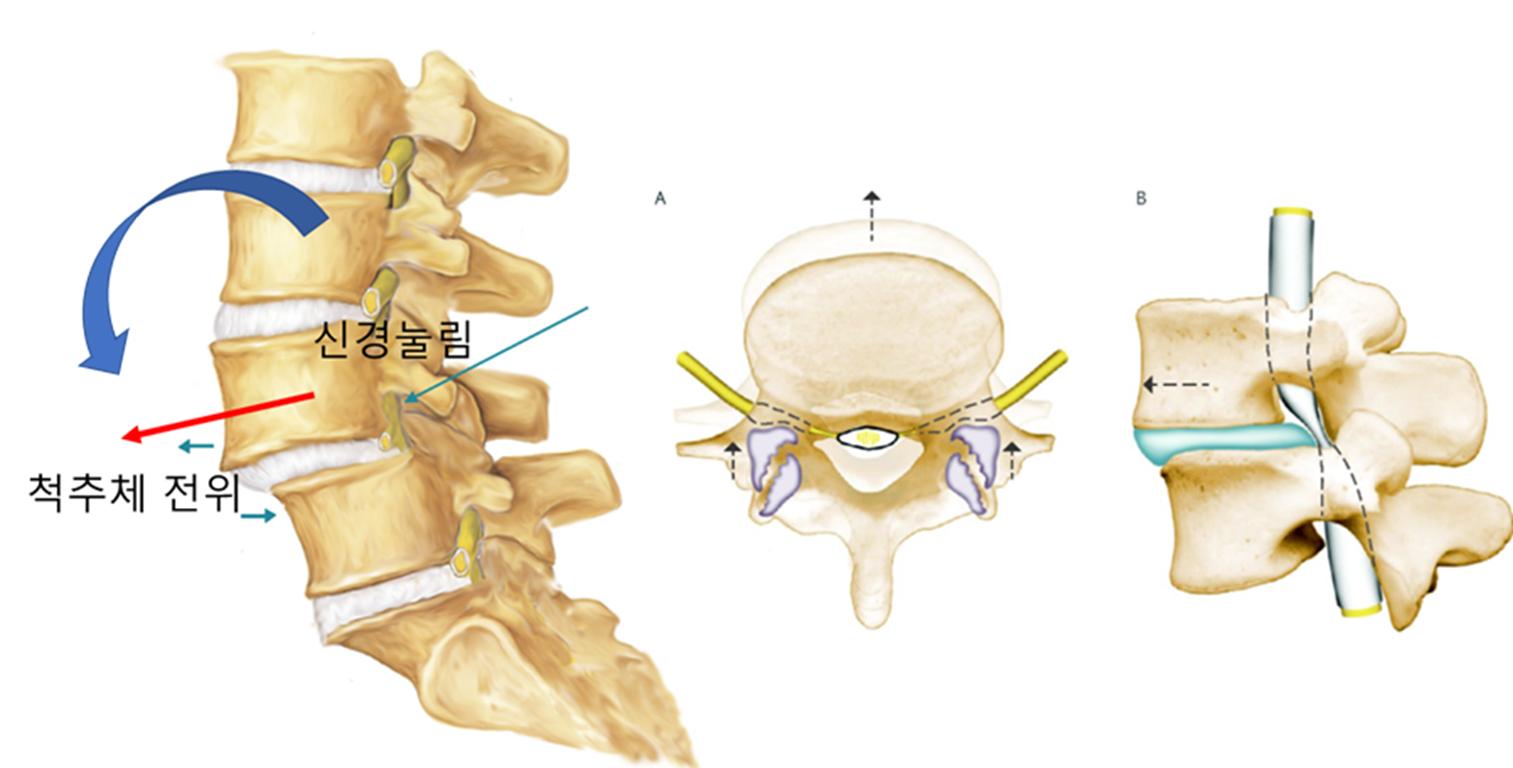
Lumbar spondylolisthesis is a condition in which one vertebra slips forward over the vertebra below it. It can be related to a defect in the pars interarticularis or to degenerative changes in the disc and facet joints. When the slippage also narrows the spinal canal, leg numbness or difficulty walking can occur.
Treatment Direction
Alignment and Nerve Assessment
X-rays show spinal alignment and the degree of slippage, while MRI may be used to assess nerve compression and stenosis.
Pain Control
Medication, physical therapy, and injections are considered first according to symptoms and the degree of nerve compression.
Rehabilitation and Daily Management
Repeated strain on the lower back is reduced, while abdominal and gluteal stabilization exercises help maintain daily function.
Notice
A treatment plan is not determined by the condition name alone. Examination findings, imaging, neurological symptoms, and daily limitations are considered together.
Do not put off persistent pain. Have it checked.
Our staff can guide you during clinic hours. Call us if you have questions before your visit.